
Beyond Göbekli Tepe: Karahantepe and the Taş Tepeler (Stone Hills)Project

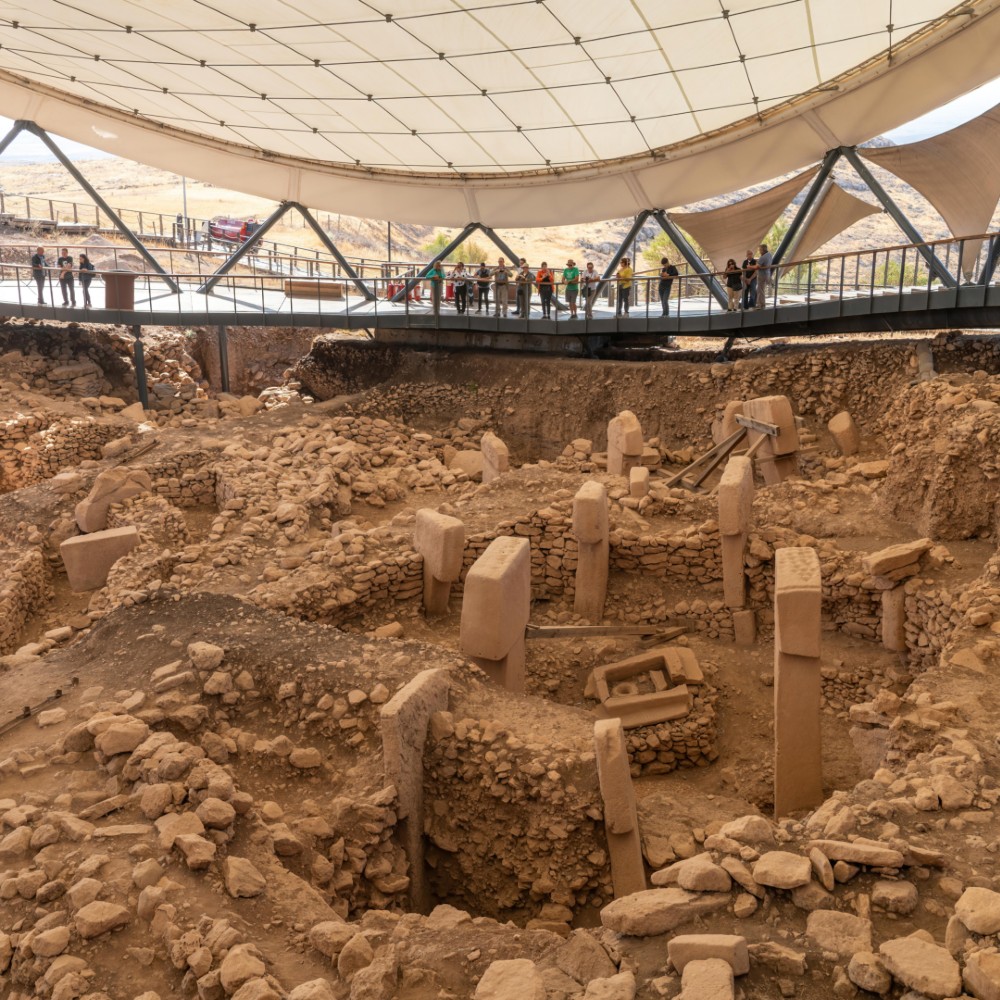
Rewriting the History of Humanity
Göbekli Tepe is internationally recognized as one of the most groundbreaking archaeological discoveries of our time.
Yet what we are only beginning to understand is that this story neither began nor ended at Göbekli Tepe.
Across the limestone plateaus surrounding Şanlıurfa, a much wider Neolithic cultural landscape has been revealed—today known as Taş Tepeler (Stone Hills). Together, these sites are transforming our understanding of how early humans transitioned toward belief systems, ritual life, and complex social organization—long before settled agriculture.
Göbekli Tepe: The First Chapter
Dating back to around 9600 BCE, Göbekli Tepe is widely accepted as the world’s oldest known monumental sanctuary.
At a time when humanity still lived as hunter-gatherers, people came together to construct massive T-shaped stone pillars, intricately carved with animal symbols. This discovery overturned the long-held assumption that agriculture came before religion, proving instead that shared belief may have been the driving force behind social cooperation.
Today, Göbekli Tepe’s modern protective structure allows visitors to experience this extraordinary site while preserving its fragile remains. For historians and travelers alike, it represents the earliest known expression of ritual architecture.
Yet one crucial question remained:
Was Göbekli Tepe an isolated phenomenon—or part of a much larger ritual world?
Karahantepe: The Missing Link
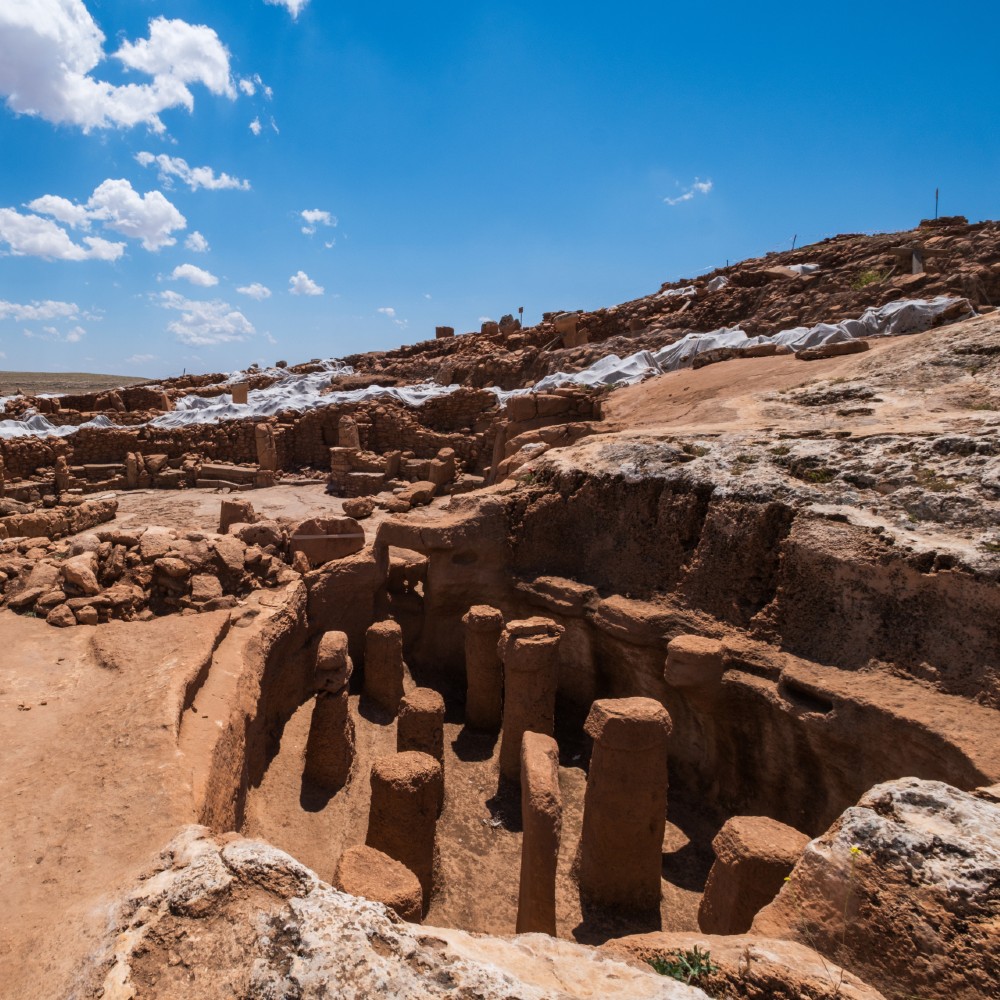
The answer began to emerge at Karahantepe, located approximately 60 kilometers east of Göbekli Tepe.
Discovered more recently, Karahantepe is now considered one of the most significant archaeological revelations of the 21st century and a central pillar of the Taş Tepeler narrative.
What Makes Karahantepe Unique?
• More than 250 T-shaped pillars found in situ
• Highly realistic human sculptures, some with carved heads and facial features
• A dramatic rock-cut ritual chamber, centered around a human figure
• Compelling evidence that the human body and identity were central to Neolithic ritual practices
While Göbekli Tepe emphasizes animal symbolism, Karahantepe places the human figure at the heart of ritual life, suggesting a profound shift in belief systems and social identity.
Many researchers now believe Karahantepe represents a more advanced or alternative phase of the same ritual tradition.
A 12,000-Year-Old Human Face
One of the most striking discoveries at Karahantepe emerged during the 2025 excavation season:
a T-shaped pillar carved with a clearly defined human face, dating back nearly 12,000 years.
This finding confirms that Neolithic communities used these monumental stones not merely as architectural elements, but as symbolic representations of humanity itself.
With carved eyes, nose, and facial contours, the figure offers rare insight into how early Anatolian societies perceived and portrayed their own identity.
The site’s “Main Chamber,” adorned with human head reliefs, provides one of the most intimate glimpses into ritual life at the dawn of civilization.
“It’s not just stone; it’s humanity etched into history,”
— as one archaeologist described the discovery.
Taş Tepeler: Rewriting the History of Humanity
The Taş Tepeler Project, led by Türkiye’s Ministry of Culture and Tourism, is among the most ambitious Neolithic research initiatives ever undertaken.
Currently, more than 12 excavation sites are being studied together within this project.
Key Taş Tepeler Sites Include:
• Göbekli Tepe
• Karahantepe
• Sayburç
• Sefertepe
• Çakmaktepe
• Harbetsuvan Tepesi
All date back 11,000–12,000 years, forming a connected ritual landscape rather than isolated monuments.
Recent Discoveries Illuminating the Neolithic World
Ongoing excavations continue to reveal the symbolic depth of early human societies:
• 🔹 A sealed-mouth statue, believed to represent death or transition rituals
• 🔹 A human statue from Göbekli Tepe, likely used as a votive offering
• 🔹 Newly discovered face reliefs at Sefertepe, carved in diverse artistic styles
• 🔹 A black serpentine bead decorated with a double-faced human motif
These discoveries demonstrate that Neolithic communities were deeply engaged in symbolism, memory, and meaning-making—not merely survival.
What Taş Tepeler Tells Us
• Complex ritual life existed before permanent settlements
• Belief systems may have catalyzed social cooperation
• Monumental architecture predates agriculture and metal tools
Taş Tepeler is not simply an archaeological project;
it is one of the key regions for understanding the origins of civilization itself.
Why Go Beyond Göbekli Tepe?
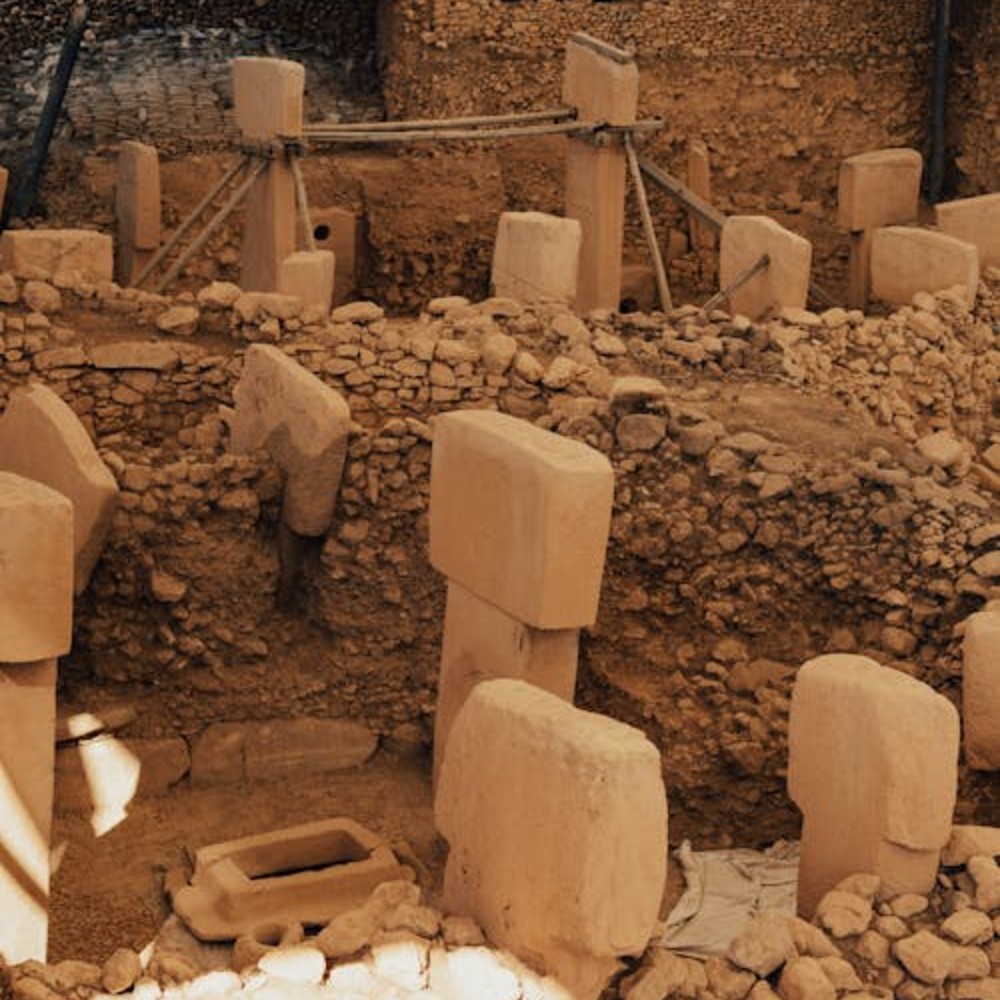
Göbekli Tepe is now a well-organized and accessible archaeological site.
In contrast, Karahantepe and other Taş Tepeler locations remain active excavation zones, offering a quieter and far more immersive experience.
Visiting Beyond Göbekli Tepe Means:
• Fewer crowds and deeper silence
• A stronger sense of discovery
• Direct engagement with living archaeology
• A journey driven by curiosity rather than sightseeing
These places are not open-air museums—they are witnesses to humanity’s earliest questions.
Planning Your Visit
• Best time to visit: April–May & September–October
• Base city: Şanlıurfa
• Recommended: Visiting with an expert guide to fully understand the symbolism and archaeological context
Many Taş Tepeler sites are remote and unmarked, making guided exploration essential.
More Than a Tour: A Journey to Human Origins
Göbekli Tepe shows us what happened.
Karahantepe and the Taş Tepeler sites explain why it mattered.
Here, you stand at the moment when humans first gathered not only to survive—but to believe, symbolize, and create shared meaning.
Explore Taş Tepeler with BarefootPlusTravel
At BarefootPlusTravel, we design expert-led, small-group and private journeys focused on archaeology, storytelling, and cultural depth.
We don’t just take you to famous sites—we take you into the heart of the story.
Contact us to design your personalized Taş Tepeler and Göbekli Tepe experience.