
Discover the Taş Tepeler Region: Göbeklitepe, Karahantepe and Sayburç

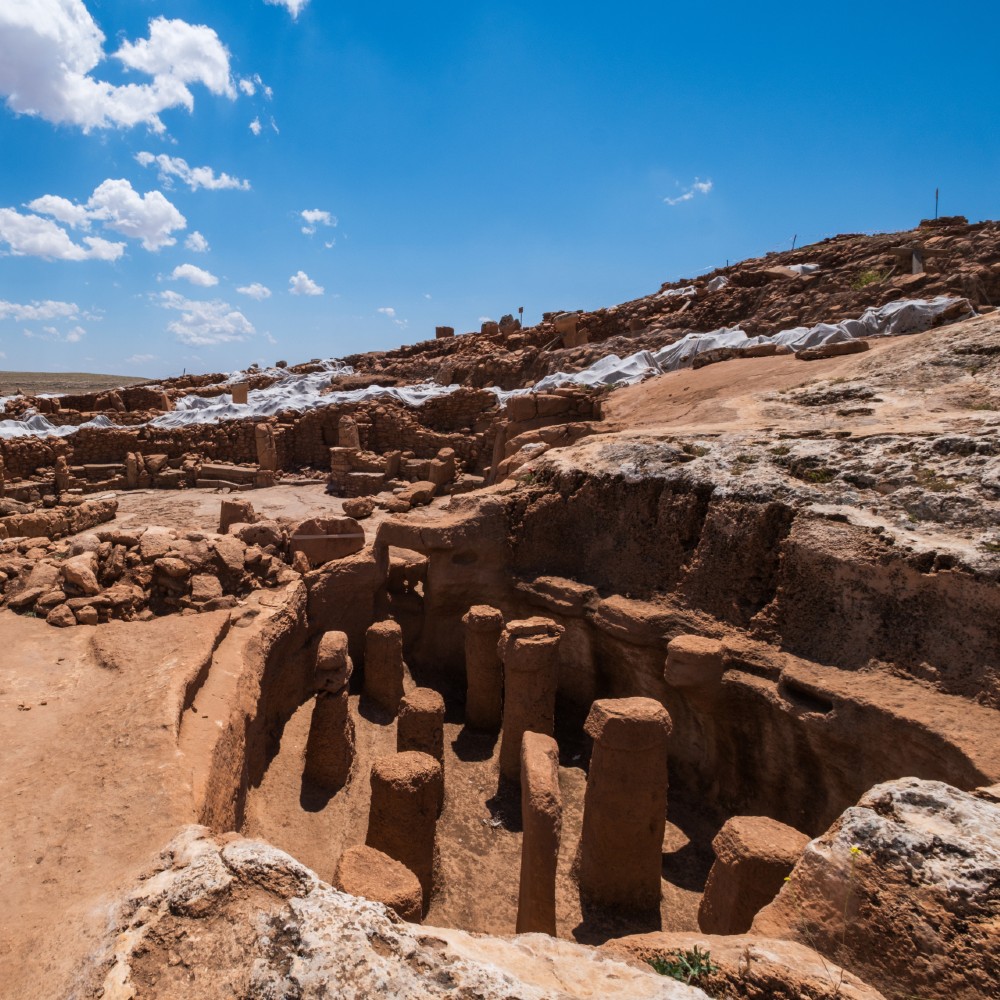
Explore the Mysterious Neolithic World of Şanlıurfa, Türkiye
The Şanlıurfa region of southeastern Türkiye is home to some of the most fascinating archaeological discoveries in human history. Among these remarkable sites are Göbeklitepe, Karahantepe, and Sayburç, which offer valuable insights into the lives, beliefs, artistic traditions, and architectural achievements of early Neolithic communities.
Dating back approximately 12,000 years, these archaeological sites preserve evidence of a period when human communities were developing new ways of living, creating monumental structures, and expressing complex ideas through art and symbolism.
As part of the Taş Tepeler Project, these sites are helping researchers investigate how early communities organized their lives, interacted with their environment, and developed new forms of social cooperation.
Recent discoveries, particularly those announced at Karahantepe in 2025, have brought renewed international attention to this remarkable archaeological landscape.
Whether you are passionate about archaeology, ancient civilizations, or cultural travel, exploring the Taş Tepeler region offers a fascinating journey into humanity’s distant past.
What Is the Taş Tepeler Project?
The Taş Tepeler Project is a major archaeological research initiative launched in 2021 by Türkiye’s Ministry of Culture and Tourism.
The project focuses on Neolithic settlements in and around Şanlıurfa, a region that preserves important evidence of early human communities and the development of monumental architecture.
The archaeological sites extend across a broad landscape between the foothills of the Eastern Taurus Mountains and the Harran Plain. Through excavations, surveys, and scientific research, archaeologists are investigating how communities lived, built structures, produced symbolic objects, and interacted with one another during the Neolithic period.
The project brings together Turkish and international researchers and institutions to study the region’s archaeological heritage.
Its objectives include identifying previously unknown sites, documenting archaeological remains, investigating relationships between settlements, and improving our understanding of early social organization.
Göbeklitepe, Karahantepe, and Sayburç are among the best-known sites associated with this wider archaeological landscape.
Together, they provide different perspectives on the creativity, beliefs, and everyday lives of the communities that inhabited southeastern Türkiye thousands of years ago.
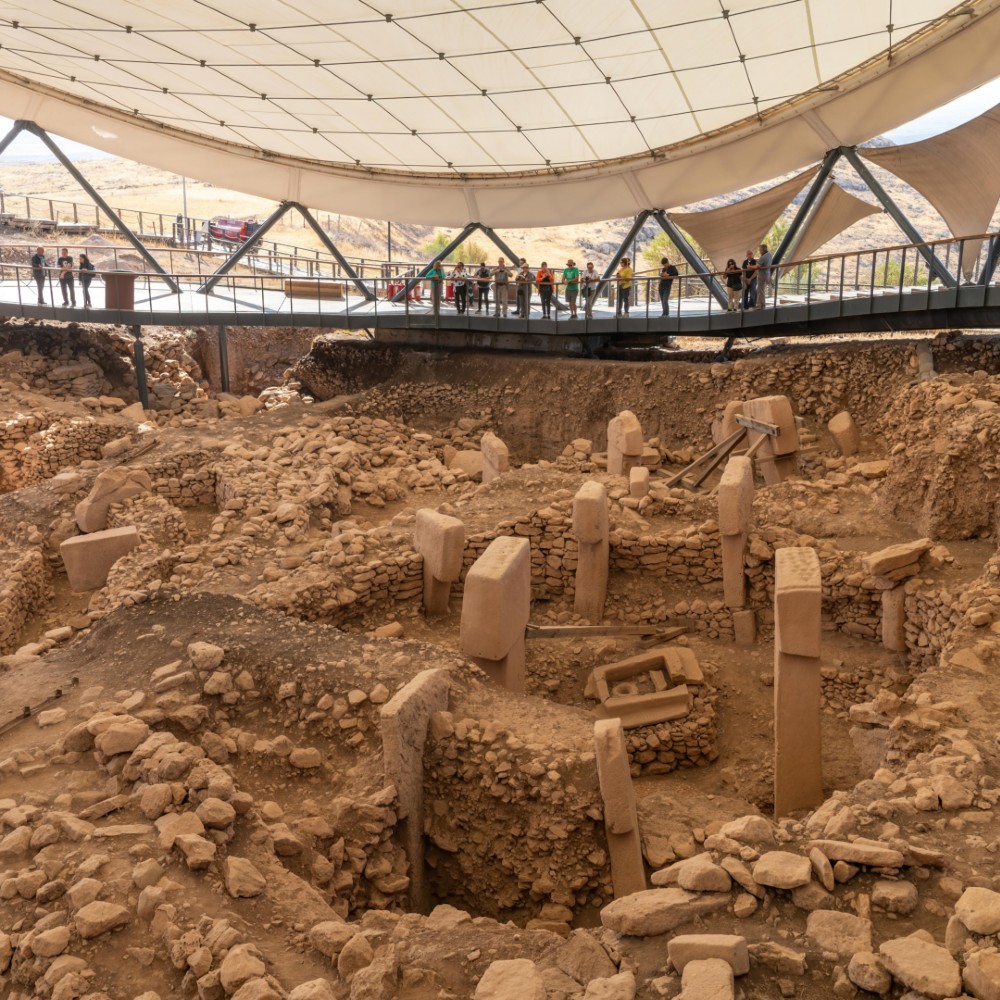
Göbeklitepe: A UNESCO World Heritage Site
Göbeklitepe is one of Türkiye’s most significant archaeological sites and an internationally recognized landmark in the study of early human history.
Located approximately 15 kilometres northeast of Şanlıurfa, the site was inscribed on the UNESCO World Heritage List in 2018.
Göbeklitepe is particularly famous for its monumental stone enclosures and distinctive T-shaped limestone pillars, some decorated with detailed images of wild animals.
According to UNESCO, the monumental structures date primarily to the Pre-Pottery Neolithic period, between approximately 9600 and 8200 BCE.
These buildings demonstrate that prehistoric communities possessed remarkable architectural and artistic abilities long before the emergence of written records.
Why Is Göbeklitepe So Important?
Göbeklitepe has transformed discussions about the development of early human societies.
Its monumental structures were built by communities whose way of life was still closely connected to hunting and gathering. The scale and complexity of the architecture demonstrate an impressive capacity for planning, cooperation, and skilled craftsmanship.
The pillars themselves are particularly remarkable. Some represent stylized human forms, while others feature reliefs of animals such as foxes, snakes, and other wild species.
These images offer important clues about the symbolic world of the people who created them.
Researchers continue to investigate how the structures were used and what their decorations may have meant. Their interpretation remains an active area of archaeological study.
Göbeklitepe: A Ritual Centre or a Place of Everyday Life?
Göbeklitepe was initially interpreted primarily as a ceremonial or ritual centre because of its monumental structures and distinctive artistic representations.
However, archaeological research has revealed a more complex picture.
UNESCO notes that excavations have also identified less monumental structures that appear to have served domestic purposes.
This evidence encourages researchers to examine how different aspects of life may have overlapped at the site, including communal gatherings, symbolic practices, and everyday activities.
Rather than offering a simple explanation of prehistoric life, Göbeklitepe continues to raise important questions about the relationship between architecture, social organization, and belief.
Ongoing Archaeological Research at Göbeklitepe
Göbeklitepe remains the focus of continuing archaeological investigation and conservation work.
Research examines the site’s architecture, stone carvings, environmental context, and relationship with other Neolithic settlements in Upper Mesopotamia.
The discoveries made here provide an essential foundation for understanding the wider Taş Tepeler region.
For visitors, Göbeklitepe offers a rare opportunity to encounter a monumental landscape created thousands of years before the first written historical records.
Karahantepe: Discover the 11,500-Year-Old Neolithic World
Located within Tek Tek Mountains National Park in Şanlıurfa province, Karahantepe is one of the most important archaeological sites associated with the Taş Tepeler Project.
The site contains monumental structures, stone pillars, human representations, animal carvings, and other archaeological remains dating to the Neolithic period.
Karahantepe is especially valuable because it provides opportunities to investigate how early communities built shared spaces, created symbolic images, and organized collective activities.
Although it shares important features with Göbeklitepe, Karahantepe also has distinctive archaeological characteristics that contribute to our understanding of the diversity of Neolithic communities.
What Was Discovered at Karahantepe in 2025?
Several remarkable discoveries announced in 2025 brought Karahantepe to international attention.
These finds included a T-shaped pillar bearing a carved human face, a group of tiny animal figurines, and a large architectural structure containing human representations and tiered seating.
Together, they offer new evidence for investigating prehistoric sculpture, symbolic expression, and communal architecture.
1. A T-Shaped Pillar with a Carved Human Face
In October 2025, Türkiye’s Ministry of Culture and Tourism announced the discovery of a T-shaped stone pillar bearing a carved human face at Karahantepe.
T-shaped pillars are among the defining features of several Neolithic archaeological sites in the Şanlıurfa region.
At Göbeklitepe and other sites, some pillars feature carved arms and hands, supporting interpretations that they represent stylized human figures.
The Karahantepe discovery is particularly significant because the human face is carved directly onto the upper portion of a T-shaped pillar.
The facial features include pronounced contours, deep eye sockets, and a broad nose. Their style has similarities to other human representations found at Karahantepe.
The discovery provides researchers with another opportunity to investigate how Neolithic communities represented the human form and expressed symbolic ideas through stone sculpture.
Although the precise meaning of the pillar remains uncertain, it adds an important new example to the study of human representation in early monumental art.
2. Tiny Animal Figurines: A Remarkable Discovery in Prehistoric Art
In August 2025, another fascinating discovery at Karahantepe attracted international attention.
Archaeologists uncovered a carefully arranged group of tiny stone animal figurines representing a fox, a vulture, and a wild boar.
Each figurine measured approximately 3.5 centimetres in height. The objects were found inside a small lidded container placed within a larger vessel.
Their arrangement was particularly intriguing. Rather than being discovered as separate objects, the figurines had been deliberately positioned together.
Researchers have suggested that the arrangement may have communicated a story or symbolic message. The discovery has therefore raised questions about how Neolithic communities expressed ideas, shared memories, and developed traditions of symbolic communication.
The exact meaning of the objects has not been established, and further research is needed to understand their original purpose.
Nevertheless, the find is significant because it demonstrates that the archaeological importance of Karahantepe extends beyond monumental architecture.
Small objects can also provide valuable evidence about the artistic abilities, cultural practices, and possible shared narratives of early communities.
The figurines offer a fascinating reminder that the people who lived in this region thousands of years ago expressed their ideas through a variety of artistic forms.
3. A Monumental Structure with Tiered Seating and Human Figurines
In November 2025, archaeologists announced another important discovery at Karahantepe: a large structure approximately 17 metres in diameter.
The building contains broad, tiered seating arrangements, human heads incorporated into its walls, and seated human figurines.
The excavation team has suggested that the architectural design may have provided a space for communal gatherings.
Because of its seating arrangement, the structure has been compared to an odeon or amphitheatre. These are modern comparisons, however, and its precise function remains a subject of archaeological investigation.
The discovery is particularly interesting because it provides an opportunity to explore how Neolithic communities designed spaces for collective activities.
It also raises questions about the relationship between architecture, social interaction, and symbolic representation.
Researchers have identified different phases of settlement at Karahantepe, including changes in the design of buildings over time. The newly reported structure contributes to this broader investigation of how communal and residential spaces developed.
Rather than viewing Karahantepe solely as a place of monumental stonework, these findings encourage researchers to consider how its architecture may have supported different aspects of community life.
Why Are the 2025 Discoveries at Karahantepe Important?
The discoveries announced in 2025 reveal several different aspects of Neolithic life.
The human-faced pillar provides new evidence for the representation of the human form in monumental stonework.
The tiny animal figurines raise questions about symbolic communication and the possible use of objects to convey shared ideas.
The large structure with tiered seating offers further evidence for investigating communal architecture and the organization of collective activities.
Taken together, these discoveries show why Karahantepe is so important to ongoing archaeological research.
They do not provide definitive answers to every question about Neolithic society. Instead, they give researchers new evidence to examine and new questions to investigate.
As excavations continue, Karahantepe is helping build a more detailed picture of the communities that inhabited southeastern Türkiye approximately 11,500 years ago.
Karahantepe’s Architecture and Stone Carvings
Beyond its recent discoveries, Karahantepe is notable for its carved stone surfaces, sculptural representations, and monumental architectural remains.
Human figures and animals appear in different forms throughout the site, demonstrating a rich tradition of artistic expression.
Some carvings depict snakes and other animals, while human representations highlight the importance of the human form in the site’s symbolic world.
These objects and structures offer researchers different ways to investigate the cultural practices of Neolithic communities.
However, the precise meaning of many of the representations remains uncertain. Their interpretation depends on archaeological context and continuing scientific research.
For visitors, the combination of architecture and sculpture makes Karahantepe a particularly fascinating place to explore.
Protecting Karahantepe for Future Generations
Archaeological excavations at Karahantepe have been carried out since 2019 within the framework of the Taş Tepeler Project.
Conservation is an essential part of this work because exposed archaeological remains can be vulnerable to environmental conditions, including wind and temperature fluctuations.
In March 2025, Türkiye’s Ministry of Culture and Tourism announced work on a protective roof designed to safeguard approximately 5,000 square metres of the excavation area.
The project aims to improve the long-term preservation of the remains while minimizing intervention in the archaeological landscape.
Protective structures are particularly important for exposed walls, stone carvings, and other features that need to remain in their original archaeological context.
Conservation work and archaeological research therefore progress together, helping ensure that the site can be studied and protected for future generations.
Sayburç: Discover the Secrets of the Neolithic World
Sayburç is another important archaeological site in the Şanlıurfa region.
Located on a plateau near the foothills of the Eastern Taurus Mountains, the site contains evidence of occupation during different historical periods, including the Neolithic and Roman periods.
Sayburç is particularly notable for its figurative reliefs, which depict humans and animals in striking compositions.
These carvings provide valuable insights into the artistic traditions and symbolic world of early communities.
Although Sayburç is smaller and less widely known than Göbeklitepe, its archaeological discoveries contribute significantly to our understanding of the wider Taş Tepeler landscape.
The Sayburç Reliefs: Stories Carved in Stone
Among the most remarkable discoveries at Sayburç are reliefs depicting human figures, bulls, and leopards.
The figures appear together in dynamic compositions that suggest movement and interaction.
These scenes are important because they provide evidence of how prehistoric communities represented humans and animals through visual art.
The combination of human and animal imagery raises questions about the relationships between people, wildlife, and symbolic beliefs.
Researchers continue to investigate the meaning of these compositions. Although their precise interpretation remains uncertain, the reliefs provide important evidence of the artistic and cultural traditions of Neolithic societies.
They also demonstrate that the region’s archaeological heritage extends beyond monumental architecture to include complex visual representations.
What Do the Sayburç Reliefs Tell Us About Neolithic Life?
The reliefs at Sayburç offer a valuable opportunity to examine the role of imagery in early human communities.
Their carefully composed scenes suggest that the people who created them possessed sophisticated artistic skills and used visual representations to express ideas.
However, the exact meanings of the figures and their relationships cannot be established with certainty.
Rather than assigning a single explanation to the carvings, archaeologists study their placement, style, and relationship to the surrounding structures.
This approach helps researchers explore the possible cultural significance of the reliefs while acknowledging the limits of what can currently be known.
For visitors, the Sayburç carvings provide an especially engaging perspective on the symbolic world of the Neolithic period.
Exploring the Archaeological Structures at Sayburç
Excavations at Sayburç have revealed substantial structures carved into the bedrock, along with round buildings enclosed by stone walls.
These remains provide evidence of architectural knowledge and organized construction.
The structures may have served different purposes, and their interpretation remains dependent on ongoing research.
Exploring Sayburç offers an opportunity to appreciate the diversity of architectural forms found across the Taş Tepeler region and to understand how different settlements contribute to the study of Neolithic communities.
New Discoveries at Sayburç and Other Taş Tepeler Sites
The 2025 archaeological season brought further attention to the wider Taş Tepeler region, with new discoveries announced at several sites.
At Sayburç, Karahantepe, Göbeklitepe, and other locations, archaeological research continues to reveal new examples of human representation, symbolic objects, and monumental architecture.
In November 2025, Türkiye’s Ministry of Culture and Tourism also highlighted a human sculpture with a distinctive closed-mouth appearance discovered at Göbeklitepe, along with additional human-face representations and other finds from sites in the region.
These discoveries demonstrate that the Taş Tepeler Project is not focused on a single archaeological site. Instead, it investigates a wider landscape of settlements that may help researchers understand the relationships between different Neolithic communities.
Each new find contributes to the ongoing study of early artistic traditions, architecture, and social organization.
Göbeklitepe vs. Karahantepe: What Is the Difference?
Göbeklitepe and Karahantepe are both important Neolithic sites in the Şanlıurfa region, but each offers a distinct archaeological experience.
Göbeklitepe is internationally renowned for its monumental stone enclosures and T-shaped pillars decorated with animal reliefs. Its UNESCO World Heritage status reflects its outstanding importance for understanding early monumental architecture.
Karahantepe has attracted particular attention for its human representations, sculptural discoveries, and architectural remains. The discoveries announced in 2025 have added new evidence for investigating human imagery and communal spaces.
Sayburç contributes another perspective through its distinctive figurative reliefs and archaeological structures.
Together, these sites illustrate the diversity of artistic and architectural traditions in the Neolithic landscape of southeastern Türkiye.
Visiting all three provides a broader context for understanding the region’s archaeological importance than exploring any one site alone.
Can You Visit Göbeklitepe, Karahantepe, and Sayburç in One Trip?
Yes. Travellers can plan a cultural itinerary around Şanlıurfa that includes Göbeklitepe, Karahantepe, and Sayburç.
The practical schedule depends on the amount of time available, transport arrangements, opening hours, and the time visitors wish to spend at each site.
A carefully planned day trip may be possible, but visitors interested in archaeology often benefit from allowing more time to explore the sites and understand their historical context.
A private guided tour can help bring the discoveries to life by explaining the architecture, stone carvings, and archaeological evidence encountered along the way.
The experience can also be combined with a visit to Şanlıurfa’s historic centre, traditional markets, and local restaurants.
For travellers who wish to explore the region in greater depth, an overnight stay in Şanlıurfa can provide additional flexibility.
Before travelling, check current opening hours, access arrangements, and any site-specific visitor restrictions.
Why Visit Şanlıurfa? A Journey into Early Human History
Şanlıurfa offers a remarkable combination of archaeological heritage, living culture, traditional cuisine, and regional history.
For travellers interested in ancient civilizations, the region provides an opportunity to explore some of the most important Neolithic discoveries in the world.
Göbeklitepe introduces visitors to monumental architecture and distinctive stone carvings. Karahantepe offers remarkable examples of sculpture and archaeological structures, while Sayburç provides a closer look at the figurative reliefs of early communities.
Beyond the archaeological sites, Şanlıurfa’s historic centre and traditional markets offer opportunities to experience the region’s cultural atmosphere.
Local cuisine adds another dimension to the journey, allowing visitors to discover the culinary traditions of southeastern Türkiye.
Combining archaeological visits with the city’s cultural attractions creates a richer understanding of the region’s history and heritage.
Discover the Taş Tepeler Region with BarefootPlusTravel
Exploring the Taş Tepeler region is an opportunity to discover a remarkable chapter in human history.
From the monumental structures of Göbeklitepe to the sculptural discoveries of Karahantepe and the striking reliefs of Sayburç, these sites offer different perspectives on the creativity and social life of Neolithic communities.
The discoveries announced in 2025 have added new evidence and new questions to an already fascinating archaeological story.
At BarefootPlusTravel, we help travellers explore Türkiye through thoughtfully planned cultural experiences and tailor-made itineraries.
A visit to Şanlıurfa can be designed around your interests, whether you want to focus on archaeology, explore the region’s cultural heritage, or combine ancient sites with local food and historical attractions.
Discover the Taş Tepeler region and experience the extraordinary archaeological heritage of southeastern Türkiye.
Contact BarefootPlusTravel to plan your cultural journey to Göbeklitepe, Karahantepe, and Sayburç.